

Schools often react after problems become visible: bullying reports increase, vaping appears in bathrooms, or students show signs of stress. But what if prevention was planned before the pressure arrived?
UNESCO’s 2019 global report found that 32% of students had been bullied by peers at school at least once in the previous month. That is a strong reason to make prevention regular, visible, and practical.
This guide explains which global awareness dates schools can use, how to turn them into meaningful campaigns, and how to avoid one-day activities students quickly forget.
Here’s What’s Inside
A good school prevention calendar is not packed with every international observance available. It selects a manageable group of dates that match real student needs, the school year, and available staff support. In this guide, you will find:
- nine credible global awareness dates for schools;
- campaign ideas for health, safety, bullying, rights, and substance prevention;
- a simple three-phase method for planning each initiative;
- safeguards for sensitive subjects and practical ways to measure results.
Here’s the thing: the date is only the hook. The real value comes from the lesson, conversation, reporting pathway, or policy improvement built around it. WHO notes that global health days can mobilize awareness and action, but schools still need to adapt each theme to age, culture, and local priorities.
Build the Prevention Calendar Before the School Year Gets Busy

Start by reviewing incident reports, counselor observations, attendance patterns, anonymous student feedback, and concerns raised by families. Then choose four to six priority campaigns rather than marking every possible date. A shared planning sheet should show the lead, audience, learning goal, safeguarding contact, communication channels, and follow-up activity.
A visual calendar keeps responsibilities from disappearing in email threads. Teams can use a custom calendar maker to create a branded overview for staff rooms, newsletters, screens, or student planners. Keep the design simple: one theme, one action, and one responsible team per campaign. Add preparation deadlines two to four weeks earlier, because campaigns often fail from rushed coordination, not a shortage of posters.
The Most Useful Global Awareness Dates for Schools
These dates offer a balanced starting point. Check weekday-based November observances each year.
| Date | Awareness day | Strong school campaign focus |
| January 24 | International Day of Education | Belonging, attendance, equal access |
| April 7 | World Health Day | Health literacy and healthy routines |
| May 31 | World No Tobacco Day | Vaping, nicotine, refusal skills |
| June 26 | International Day Against Drug Abuse | Evidence-based substance prevention |
| October 10 | World Mental Health Day | Help-seeking and emotional wellbeing |
| First Thursday in November | Day Against School Violence and Bullying | Bullying, cyberbullying, reporting |
| Third Sunday in November | Road Traffic Victims Day | Walking, cycling, passenger safety |
| November 20 | World Children’s Day | Student rights and participation |
| December 1 | World AIDS Day | HIV facts, prevention, stigma reduction |
Use Health and Substance Dates to Teach Usable Skills

World Health Day, World No Tobacco Day, the June drug-awareness observance, and World AIDS Day can support prevention, but only when schools move beyond warnings. Students need clear language, realistic scenarios, and trustworthy places to ask questions.
Practical activities can include:
- comparing nicotine marketing claims with health evidence;
- practicing how to leave a situation involving pressure to vape or use substances;
- teaching older students how HIV is and is not transmitted.
The good news? These campaigns can connect science, physical education, pastoral care, and media literacy. Avoid graphic images, exaggerated consequences, or public “confession” activities. Check students’ ages, the local curriculum, referral services, and the current annual theme before choosing resources. WHO lists April 7, May 31, October 10, and December 1 among major global health observances.
Connect Wellbeing, Bullying, Rights, and Everyday Safety
January 24 can open a conversation about why attendance, inclusion, and safe access to education matter. October 10 can focus on recognizing distress and seeking help, while the first Thursday of November directly supports work on violence, bullying, and cyberbullying. UNICEF’s World Children’s Day on November 20 is useful for student voice, respectful discipline, and rights-based policies. Road safety can be added during the third Sunday of November or moved to a week that fits the local timetable.
Did you know? UNESCO set the bullying observance for the first Thursday of November, not one fixed date. It encourages participation from students, families, educators, authorities, and technology partners rather than treating bullying as a classroom-only issue.
Turn Each Awareness Date Into a Three-Phase Campaign
A prevention campaign works better when the awareness day sits in the middle, not at the beginning and end. Use a simple structure:
- Prepare: Collect anonymous baseline feedback, brief staff, and publish support contacts.
- Activate: Run lessons, peer activities, family communication, and one visible school-wide action.
- Follow up: Repeat key messages, respond to concerns, and check whether students know what to do.
A 2021 updated systematic review and meta-analysis by Gaffney, Ttofi, and Farrington, published in Campbell Systematic Reviews, examined school-based anti-bullying programs and found modest average reductions in perpetration and victimization. The finding supports structured programs, not the assumption that one assembly will solve the problem.
Give Students a Role Without Compromising Safety
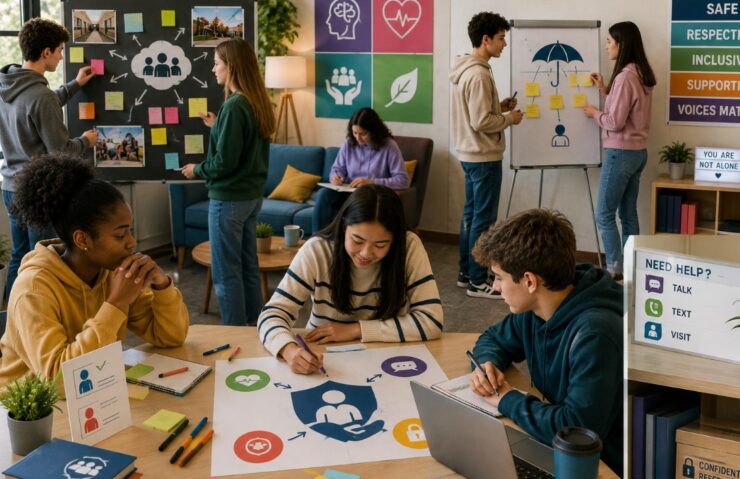
Student participation makes campaigns more relevant, but adults must control safeguarding, factual accuracy, and referral procedures. Invite students to test slogans, identify confusing rules, create age-appropriate videos, map unsafe spaces, or suggest better reporting methods. Participation should be voluntary, and nobody should be expected to disclose personal experiences publicly.
Safeguarding note: An activity should never pressure students to reveal trauma, mental health concerns, substance use, bullying, HIV status, or family circumstances. Every sensitive campaign needs a private route to a trained adult and a clear escalation process.
Check all materials for stigma, stereotypes, medical accuracy, accessibility, and age suitability. For mental health or substance-related sessions, involve the school counselor, nurse, psychologist, or an appropriately qualified local professional before launch.
Measure Whether the Campaign Changed Anything
Posters, colored clothing, and social media photos show that an event happened. They do not prove prevention improved. Decide what success means before launch, then use a few indicators staff can realistically review.
Possible measures include:
- how many students can identify a reporting route;
- changes in anonymous knowledge-check answers;
- attendance at optional support sessions;
- the number and type of concerns raised;
- teacher observations four to six weeks later.
Keep interpretation balanced. A temporary increase in reports may mean the campaign improved trust rather than worsened the problem. Compare results with the baseline, record what students found useful, and note which materials caused confusion. That review becomes the starting point for next year’s calendar, making each campaign more focused and less dependent on guesswork.
Start With a Few Dates and Build a Stronger Prevention Culture

Global awareness dates give schools a ready-made moment to begin conversations that might otherwise be postponed. Still, the calendar is not the strategy. Better prevention comes from selecting issues that match student needs, preparing staff, teaching practical skills, providing safe support routes, and checking what changed.
Start small. Choose one wellbeing date and one safety or health date for the next term. Give each campaign a clear owner, one measurable goal, and a follow-up activity. Once that rhythm works, add another priority. A manageable calendar that leads to consistent action will always be more useful than a crowded list nobody has time to support properly.
Frequently Asked Questions
1. How many awareness campaigns should a school run each year?
Four to six well-supported campaigns are usually manageable. The right number depends on staffing, student needs, curriculum, and follow-up capacity.
2. Should every year group receive the same campaign content?
No. Keep the core prevention message consistent, but adapt examples, vocabulary, activities, and referral information to students’ ages and developmental needs.
3. Can schools move a campaign away from the official date?
Yes. The date provides visibility, but educational value matters more. Move the activity when exams, holidays, or local priorities make another week more suitable.
4. Who should approve sensitive campaign materials?
A safeguarding lead and relevant qualified professional should review materials involving mental health, substance use, sexual health, violence, trauma, or medical information.